
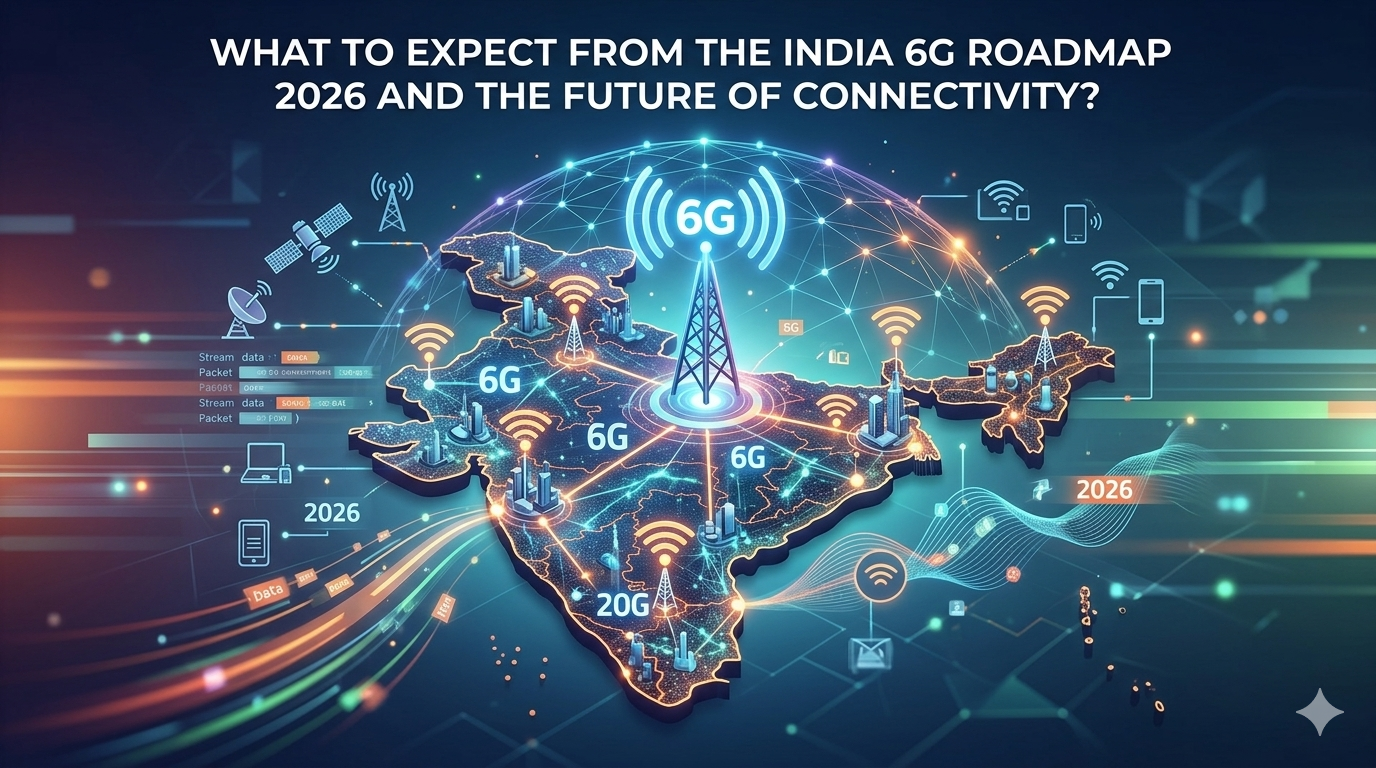
While most of us are still getting used to the lightning speeds of 5G, the tech world is already sprinting toward the next big thing. Today, the discussion around the India 6G roadmap 2026 is heating up as the Ministry of Communications prepares for the upcoming 6G Autonomous Networks Congress. We aren’t just talking about faster downloads anymore; we are talking about a world where the internet is “sensory” and integrated into every physical object around us.
The India 6G roadmap 2026 is built on the foundation of “Bharat 6G,” a vision to make India a leader in indigenous telecom technology. Unlike previous generations, 6G will rely heavily on AI-integrated networks. This means your network won’t just provide data; it will predict your needs. Imagine a surgeon in Delhi performing a robotic surgery in a rural village with ultra-low latency that feels as real as being there in person.
Key players in the telecom news India space, like Jio and Airtel, are already testing sub-terahertz frequencies. The India 6G roadmap 2026 focuses on sustainable tech, ensuring that these high-frequency towers consume less energy than their 5G predecessors. For the average consumer, this means your future devices might not even need traditional batteries as we know them today, instead drawing power from the network waves themselves.
As the India 6G roadmap 2026 progresses, the “Digital India” initiative is expected to reach its peak. By the end of this year, we expect more clarity on spectrum allocation. If you’re a developer or a tech enthusiast, now is the time to start thinking about “Hyper-Connectivity.” The future is coming fast, and the India 6G roadmap 2026 is the blueprint for a smarter, faster India.