
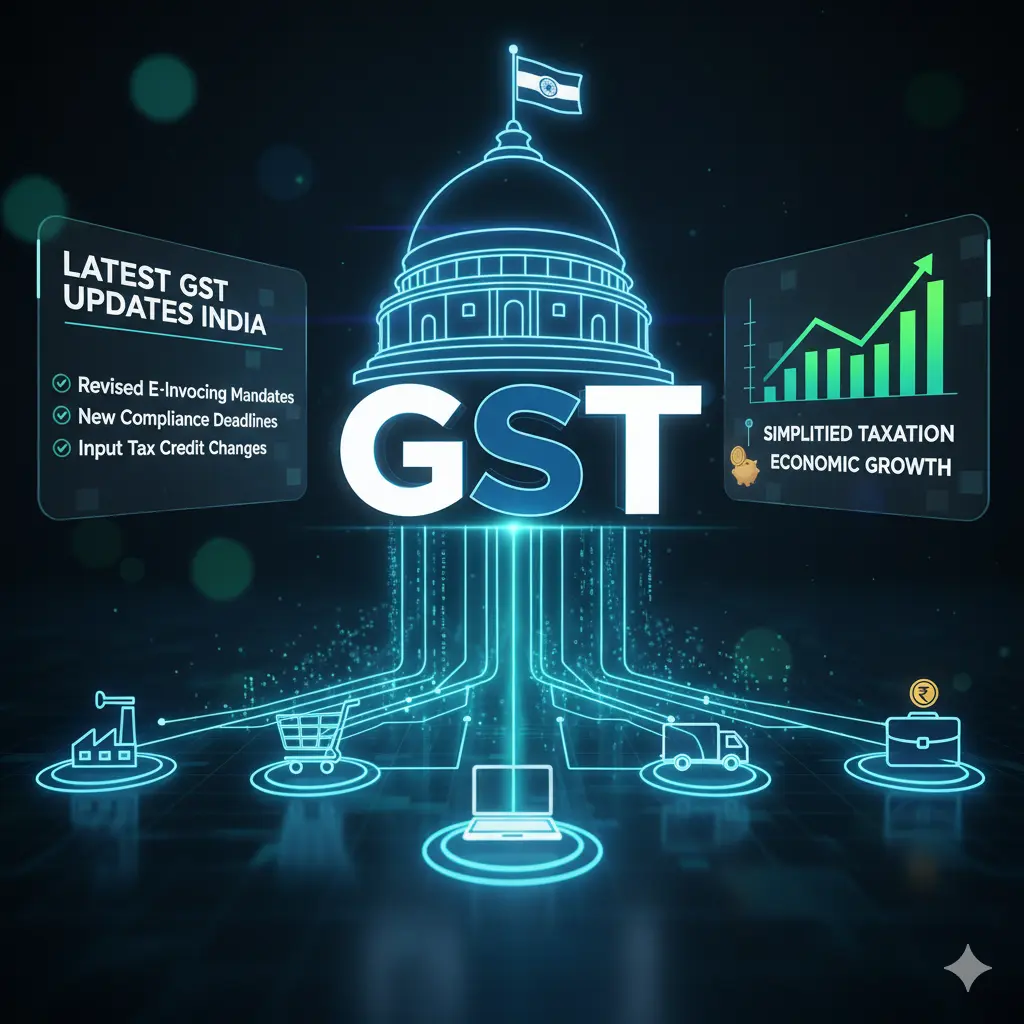
The Goods and Services Tax (GST) system is always evolving. As a business owner in India, staying informed about the latest changes is not just important—it’s essential for compliance and financial health. A recent GST update India has just been announced following the 55th GST Council meeting, and it brings significant changes for small and medium-sized enterprises (SMEs) and e-commerce sellers. This blog breaks down the new rules in simple terms, so you can understand their impact and prepare your business accordingly.
The latest notifications from the Central Board of Indirect Taxes and Customs (CBIC) focus on simplifying compliance for smaller players and tightening regulations for input tax credit (ITC) claims. Here’s what you need to know about the latest GST update India.
1. Simplified GST Returns for Businesses Under ₹5 Crore Turnover The biggest news is the introduction of a new, simplified quarterly return filing system, tentatively named ‘Sahaj-2’.
- What’s New? Businesses with an annual turnover of up to ₹5 crores can now file a much simpler, pre-filled return form once a quarter, instead of the monthly GSTR-3B and GSTR-1. Tax payments, however, will still need to be made on a monthly basis through a simple challan.
- Impact: This will significantly reduce the compliance burden, saving time and accounting costs for millions of MSMEs across India. It makes running a business easier for those who are not accounting experts.
2. Mandatory E-invoicing for B2B Transactions Above ₹2 Crore Turnover The threshold for mandatory e-invoicing has been further reduced.
- What’s New? Businesses with an annual turnover exceeding ₹2 crores must now generate electronic invoices for all their business-to-business (B2B) transactions. The previous threshold was ₹5 crores.
- Impact: This move aims to curb fake invoicing and tax evasion. For businesses now falling under this bracket, it means integrating their billing software with the government’s Invoice Registration Portal (IRP). While it’s an initial setup cost, it will streamline ITC claims in the long run.
3. Geo-tagging for New GST Registrations To combat the issue of fake registrations, the GST Network (GSTN) will now use geo-tagging.
- What’s New? During the physical verification process for a new GST registration, the location of the principal place of business will be geo-tagged and pictures will be uploaded to the portal by the tax officer.
- Impact: This adds a layer of authenticity to new registrations and will make it harder for fraudulent entities to claim illegal input tax credits. For genuine businesses, this is a one-time verification step that enhances the transparency of the entire system.
4. Clarification on GST for Online Gaming and Casinos The council has reiterated its stance on the 28% GST on the full face value for online gaming, casinos, and horse racing.
- What’s New? No new changes, but the government has issued clarifications on how the value of supply will be calculated, ending some of the industry’s confusion.
- Impact: This provides certainty for the online gaming industry, which can now structure its finances and pricing models with a clear understanding of its tax liabilities.
This latest GST update India for September 2025 is a mixed bag, offering simplification for smaller businesses while increasing scrutiny and tech-integration for mid-sized ones. The key takeaway is to be proactive. If the new e-invoicing threshold applies to you, start exploring software solutions now. If you’re eligible for the new quarterly returns, consult with your tax advisor to ensure a smooth transition. Staying ahead of these changes is the best way to ensure your business remains compliant and competitive.